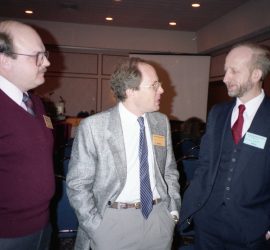
2011 Annual General Meeting

Annual General Meeting took place

10:00 a.m. Wednesday, November 16, 2011

Neepawa United Church

475 Mountain Avenue, Neepawa, Manitoba

Directors elected for 3 year terms include Chris Rempel, Earl Dueck, Pierre Faure and Gary Momotiuk.

Elected to fill a 1 year vacancy – Jake Maendel

2011 Summer

Summer 2011 newsletter download

The MBA Newsletter is published 4 times per year. To view it, you may use the freely available Adobe Reader program.

Back issues available online in pdf format.

2011 Spring

Spring 2011 NewsletterSpring 2011 newsletter download here

The MBA Newsletter is published 4 times per year. To view it, you may use the freely available Adobe Reader program.

Back issues available online in pdf format (approximately 3 meg each).

Overwinter Bee Mortality Insurance


Manitoba Agricultural Services Corporation (MASC)

INSURANCE: OVERWINTER BEE MORTALITY INSURANCE PILOT PROGRAM (NEW FOR 2011 !)

Purpose

• This pilot program insures a producer’s bees against non-manageable abnormal wintering losses, including weather-related losses, diseases and pests where there are no adequate means of control.

Eligibility

• A producer who resides and operates an apiary in Manitoba and is registered as a beekeeper under The Bee Act (Manitoba) is eligible for this program.

• Eligible producers must operate a minimum of 50 colonies.

• Strong colonies (placed in either indoor or outdoor storage) and nuclear colonies placed in indoor storage are eligible for coverage.

Coverage

• This program covers losses of strong (7 or more frames of brood) and nuclear (minimum 4 frames of brood) colonies that have suffered abnormal winter losses, or losses due to diseases and/or pests (e.g. Varroa mites, Nosema, viruses) with no means of adequate control.

• Beekeepers may select a low ($100 per colony) or high ($150 per colony) overwinter colony dollar value for coverage.

• A 30% deductible is applied to coverage.

Coverage example :

A beekeeper insures 100 colonies for overwinter storage at the high dollar value.

Coverage = 100 colonies x $150 = $15,000 Deductible = 15,000 x 0.30 = $4,500

In this scenario, the maximum coverage available is $10,500 ($15,000 – $4,500)

Coverage Exceptions

• This program does not insure against any losses resulting from inadequate or improper winter storage, inadequate surveillance, failure to follow normal or recommended beekeeper practices, and theft or vandalism.

Costs

• Premium costs are shared 40% by the beekeeper, 36% by the Government of Canada and 24% by the Province of Manitoba.

Producer share of premiums for 2011 are: Low dollar coverage = $1.79 per colony High dollar coverage = $2.68 per colony

Premium example:

A beekeeper insures 100 colonies for overwinter storage at the high dollar value.

Premium (high dollar value)

= 100 x $2.68 per colony = $268.00

Claims

• If a beekeeper believes they are in a claim position, they must file a claim with MASC on or before May 15.

• After filing a claim, an MASC adjustor will assess the losses that have occurred during the winter storage period.

Claim example:

A beekeeper insures 100 colonies for overwinter storage at the high dollar value. In spring, the beekeeper finds that 44 colonies were lost due to insurable causes.

Claim = dead colonies – deductible

= 44 – 30 = 14

= 14 x $150

= $2100

Compensation Offsets

• If a program participant received a wildlife compensation payment under the Wildlife Damage Compensation Regulation for loss of bees during the winter storage period, this payment may be deducted from any indemnity payable under this program.

Important Dates and Deadlines

August 31 is the last day to apply for this program.

November 30 is the last day to declare and confirm the number of colonies placed in winter storage.

May 15 is the last day to file a claim without a late fee.

May 31 (or 3 days prior to taking action in respect of the management and control of over-winter colonies, whichever comes first) is the last day to file a Declaration of Overwinter Colonies Mortality Report, and file a claim with late claim fees.

For more information contact your local MASC insurance agent or visit masc.mb.ca.

This information sheet contains general information only and does not form part of the Overwinter Bee Mortality Insurance Contract between an insured and MASC. In all cases, the Overwinter Bee Mortality Insurance Contract shall prevail.

NOTE: Original “FactSheet” document contains government logos for Canada (Growing Forward) and Manitoba (copied from Fact Sheet and added herein by web admin 21apr2011)

Refer MASC web site for up to date details and information

Hawaiian Queen Importation Notice


This is to inform you that there have been recent instances of small hive beetles (SHB) found in shipments of honey bee queens originating from Hawaii.  On April 7, 2011 one live SHB adult was found associated with packaging material associated with queens in Manitoba and SHB early larval instars of SHB were found in queens received in Alberta and Manitoba.  Provincial Apiarists will be working closely with the CFIA and importers to ensure that Hawaiian queens are examined for SHB.  Although there are protocols in place to mitigate the risks of introducing and spreading the SHB from Hawaii, we ask that you take the following steps to ensure that the queens that you have received are free of SHB.

  •   Examine the inside and outside of each queen cage and shipping box.
  • Pay particular attention to the area between the cage candy and wax paper, the groove along the length of the cage and any crevice or tight space on the cage or in the shipping box.
  • Eggs of SHB 2/3 the size of a honey bee egg, white and elongated and typically laid in clusters.
  • Larvae of SHB, range in size from a 2 mm to 11 mm in length and white to tan in colour with a dark tan head, forked process at the hind end, and three pairs of legs.
  • Adult SHB are 5.5- 5.7mm in length, 3.2 mm in width, dark brown almost black, round, with clubbed antennae (i.e. the last three segments of the antennae larger than the previous ones). The body is covered with hard, short wings (elytra) that don’t cover the full length of body, thereby exposing a small part of the dorsal side of the abdomen.
  • An extra safety precaution, you may want to consider:
    • Transfer the queens to new queen cages before introductions to your colonies. Then, old queen cages and all associated packaging material should be incinerated or froze at -18°C for a minimum of 72 hours.
    • Don’t bank queens in shipped cages in a queen bank unless you transfer them to new cages or you inspected them and they were free of SHB larvae.
    • If you store queens in their shipped cages in honey house, place queen cages in a room away from your general storage area to protect hive boxes from infestation by any crawling SHB larvae.

 If you find (or have reason to suspect) a small hive beetle with your shipment of queens, immediately contact the Provincial Apiculturist office (contact information on reverse side).  For pictures of the various life stages of the small hive beetle, please visit the following website:  http://edis.ifas.ufl.edu/in854


 Rhéal Lafrenière                                     David Ostermann

Provincial Apiarist                                  Pollination Apiarist

945-4825                                                    945-3861

Rheal.Lafreniere@gov.mb.ca                 David.Ostermann@gov.mb.ca


2011 Convention Sponsors

Industry Sponsors Appreciated

MBA Thanks these sponsors for contributing to a successful 105th Convention and Symposium at The Viscount Gort Conference and Trade Centre, March 2011 and through Research Auction donation plus advertising in Manitoba Beekeeper.

Arataki Honey Ltd.                             Ash Apiaries Ltd.                                 Bee Basics             

Beemaid/Manitoba Co-operative Honey Producers Ltd.

Billy Bee/McCormick Canada        Cowen Manufacturing Inc.               Dimo’s Tool & Die-Labtronics Ltd.

Dominion & Grimm Inc.                   Fraser Auction Ltd.                             F.W. Jones & Son Ltd.

Global Patties                                        Great Western Containers Inc.        Herb Isaac Sales

Kona Queen Hawaii, Inc.                  Lewis & Sons Enterprises Ltd.         MacGregor Wax Works

Mann Lake Ltd.                                     Medivet Pharmaceuticals                 Odem International

Prairie Liquid Feeds Manitoba Ltd.           Prairie Truss & Wizer Buildings Inc.

Strachan Apiaries                                 Tony Lalonde Sales                            Wellmark International

Advance Payment Program

Advance Payment For Crops for Beekeepers

Since January 2009, Manitoba Corn Growers Association, in Carman, is administering the Advance Payment for Crops Program, for paid up Manitoba Honey Producers. Please call their offices at 204-745-6661, and most any one who answers the phone can help you. Request a Cash Advance Program application form.

As a Manitoba Honey Producer you are eligible for an interest free cash advance up to $100, 000, and interest bearing (usually at Prime Rate) after that to $400,000. Advance is calculated at about 80 cents per pound (may vary slightly for a given year) for whatever barrels of honey you have remaining in inventory (i.e. unsold honey).

This program is a real benefit to producers, as repayment of loan comes due when you sell honey, or by July of the following year. Typically there is an administration fee and a security holdback of 1% of the loan value.

Call MB Corn at 204-745-6661 and any one (of Sandy Robinson, Shirley Knaggs, Myrna Veldman, or Secretary-Manager Theresa Bergsma), may help with the information package. Otherwise e-mail: mbcorn@mts.net

2011 Field Day

Beekeepers Field Day and Summer Picnic

Wednesday June 22, 2011, Glenlea Research Centre, Glenlea

On Wednesday 22 June 2011, Manitoba Beekeepers’ Association together with the Red River Apiarists’ Association hosted interested beekeepersfor an afternoon of food, information, and social time.

Over 60 people met in the Multipurpose Room at the Bruce D Campbell Farm & Food Discovery Centre at Glenlea, Manitoba. As guests approached the Research Station Road, they were welcomed by the large brown sign “Bruce D Campbell Research Station”. After parking, guests went into the Farm & Food Discovery Centre.

BeeMaid began the days’ events with an update session for their members. This was followed by lunch. Then scientists, extension staff and others provided up to date information on current events and activities.

Guests were then invited to visit the U of M Research Apiary site. Attendees heard about the recent Varroa Control Product Screening Trials, and saw first hand, the colonies ready for the treatments.

Varroa Mite Monitoring

A project of the Manitoba Beekeepers’ Association with funding provided by Growing Forward’s “Food Safety Program, For Farms”. Made possible with contributions from Merv Malyon, David Ostermann, Rhéal Lafrenière, Dr. Rob Currie, Midcan Production Services, and others.

2011 Winter

winter 2001 newsletter

2011 Winter 2011 newsletter issue here

The MBA Newsletter is published 4 times per year. To view it, you may use the freely available Adobe Reader program.

Back issues available online in pdf format (approximately 3 meg each).