Every year is different – it always has been. But while beekeeping has always been shaped by countless variables, the growing volatility of weather and the shifting climate is difficult to ignore.
Paraphrased from a presentation by guest speaker Jamie Ellis at the 2026 MBA Convention:
“We all have weather events, and if the science is right, we are going to increasingly have more weather events; and we’ll have to learn how to deal with these things. We can do this, the answers are there, but number one: we’re going to have to recognize that climate is a problem for our bees. I don’t care if you call it weather or climate. We already weather-prepare our bees here and all around the world. We’re going to have to start saying weather is an issue that we’re going to have to work with. We have to develop mitigation strategies. As an industry you need to demand and support that type of research. It’s here now, but we never get a talk on weather killing honey bees. Look at the convention program, it’s about diseases, pests, varroa, nutrition and things like that. We need to start talking about weather impacts.”
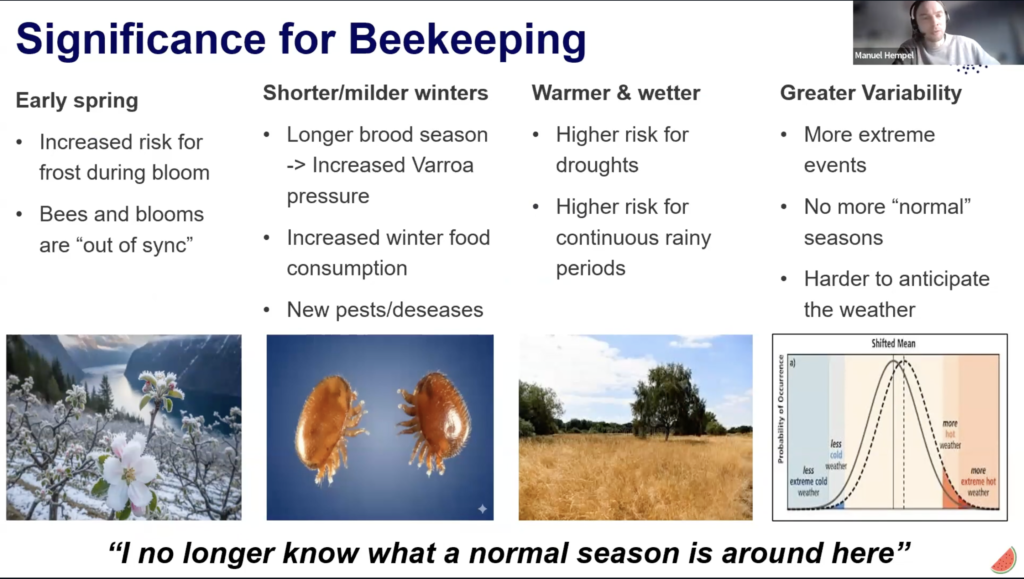
In recent years here in Manitoba, we’ve experienced forest fires, droughts, cold springs, extended warm falls, and just about every kind of winter. The image below comes from a presentation by Manuel Hempel, highlighting the influence of climate change on beekeeping.
If we consider climate alongside the evolution of farming practices, land use change, and shifting plant varieties, that alone is enough to keep us on our toes – never mind the added complexity of honey bee and varroa mite biology and management.
Climate is typically a slow variable of change, and weather a fast variable of change (Walker et al. 2012), however, it increasingly feels like climate is crossing that line, with its effects on our colonies and seasons unfolding right before our eyes. In both cases we need to take decisions today for what’s coming in the next weeks, the next year, and in our plans for the next five plus years. Again, something we have always done, but which now entails a greater extent of planning and risk management.
Back to weather! The image below illustrates how forecasting can be improved by using historical data to put the odds of prediction in a beekeeper’s favour. How this forecast is put together is detailed in the online presentation.
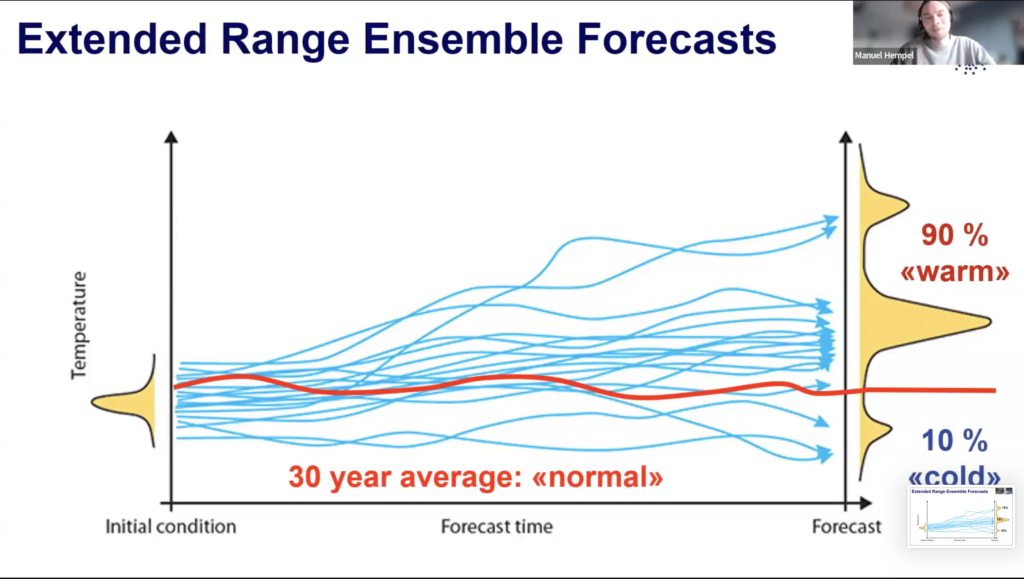
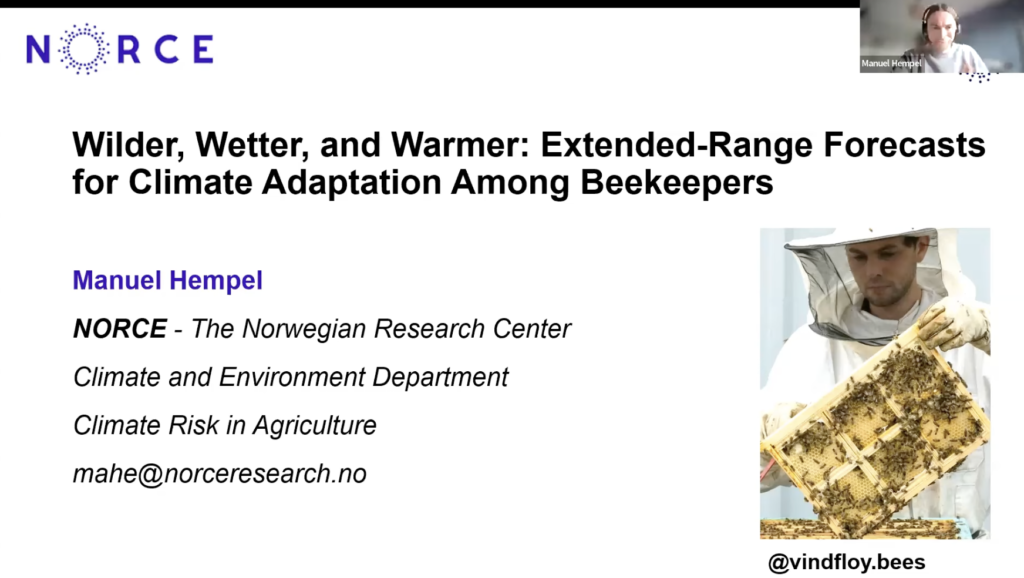
As part of the webinar series organized by the Canadian Tech Transfer Programs (CAN-BTTPs), CHC, and Véto-pharma, one of our guest presenters, Manuel Hempel, explored the topic of climate and its implications for beekeeping. If you’re looking to step back and consider the bigger picture of managing bees in a changing climate, this video is well worth a watch. To view on YouTube click image below.
Reference: Walker, B. H., Carpenter, S. R., Rockstrom, J., Crépin, A.-S., & Peterson, G. D. (2012). Drivers, “Slow” Variables, “Fast” Variables, Shocks, and Resilience. Ecology and Society, 17(3). http://www.jstor.org/stable/26269094