Guest blog by Maggie Gill from Pollinator Health International Research Association (PHIRA)
See Maggie’s previous KRTP blog contribution here: “Facing Tropilaelaps: Lessons from Georgia”.
When I wrote previously about Tropilaelaps in Georgia, the situation at the Saint Virgin Mary Convent of Jiheti was deeply concerning. Tropilaelaps was first detected in the apiary in March 2025 and by September many of the colonies managed by Natalie and Daniella were approaching collapse despite months of intensive management. At the time, it felt uncertain whether the colonies would survive the winter at all.
Over the past year I have been fortunate to continue following the apiary closely, alongside my work in Thailand and Indonesia investigating Tropilaelaps transmission and survival. Together, these experiences have started to change the way I think about Tropilaelaps biology. Increasingly, I suspect we may have underestimated both the resilience of the mite and the range of ways in which it can spread.
An Encouraging Spring in Georgia
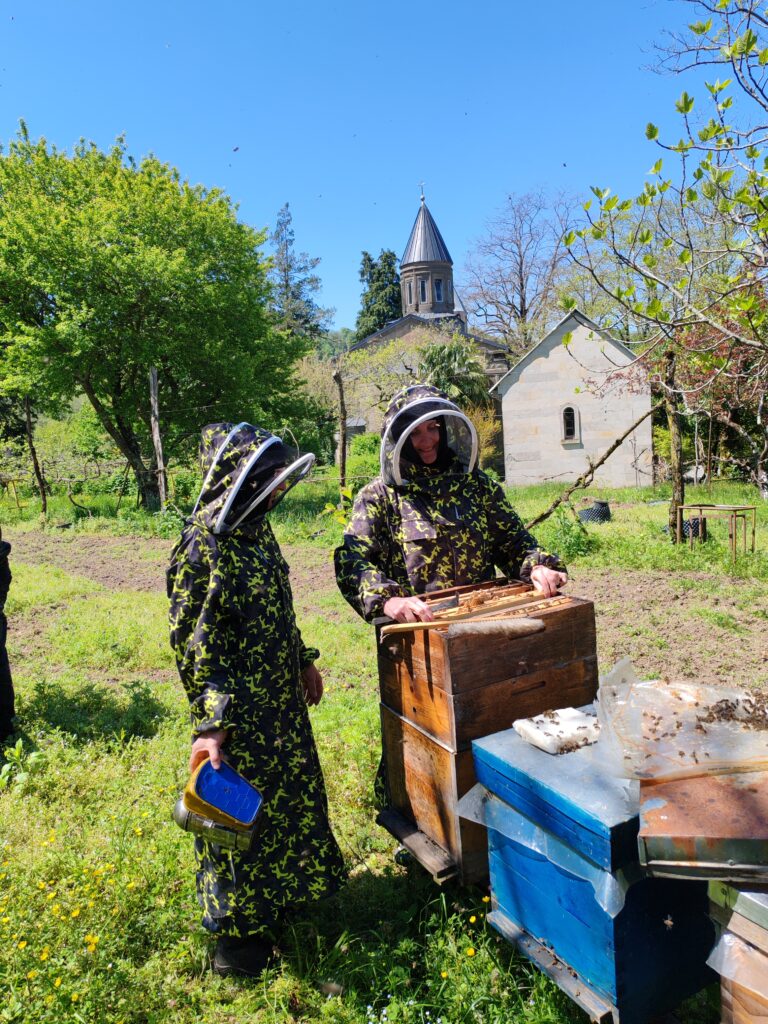
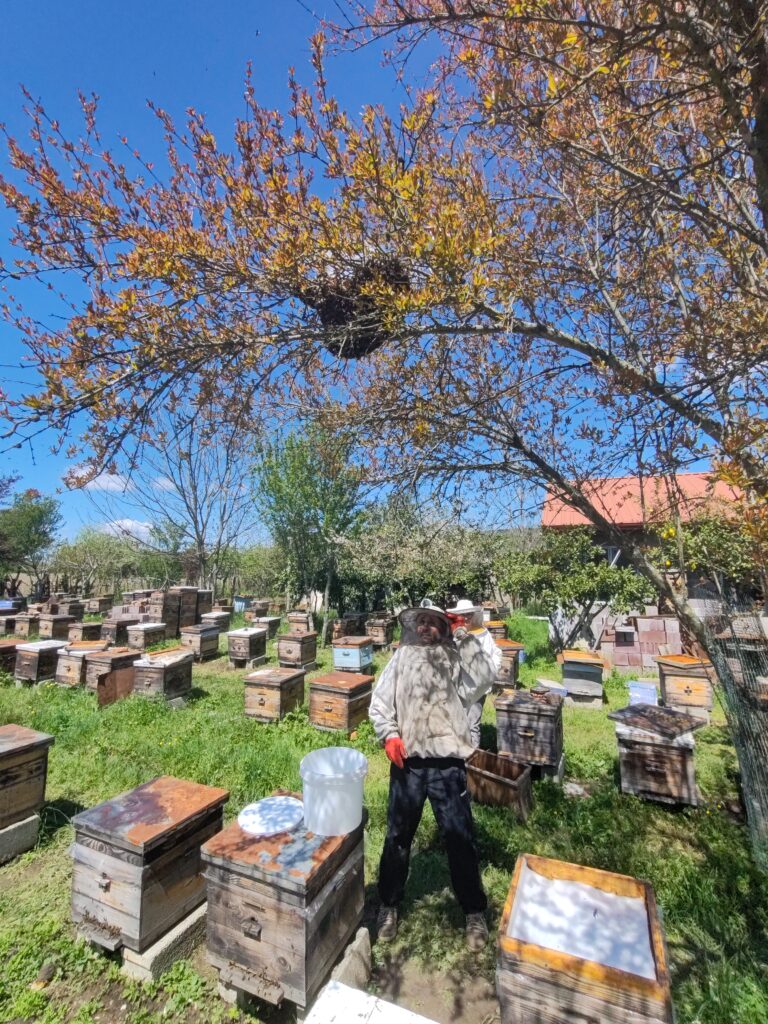
After the emergency formic acid treatments carried out in September 2025, Natalie and Daniella once again prepared the convent colonies for winter using queen caging. All queens were caged during the first week of November. The queens remained caged and the colonies remained broodless throughout the winter, allowing the mites to be targeted with oxalic acid treatments in the spring when the queens were released. This year, instead of relying on oxalic acid sublimation, Natalie and Daniella used an oxalic acid solution ‘drench’ of the bees while the colonies were still broodless. Queens were temporarily removed while the bees were treated to minimise any risk of queen damage.
I returned to Georgia in April 2026, and one of our priorities was assessing Tropilaelaps infestation levels within the convent apiary. Given the severity of infestation the previous autumn, I was unsure what we would find. This time, instead of carrying out extensive brood biopsies under the microscope, we primarily used rapid brood decapping as a monitoring tool. This technique uses wax hair removal strips applied to capped brood, allowing large areas of brood to be uncapped quickly and inspected for mites.
The results were surprisingly positive.
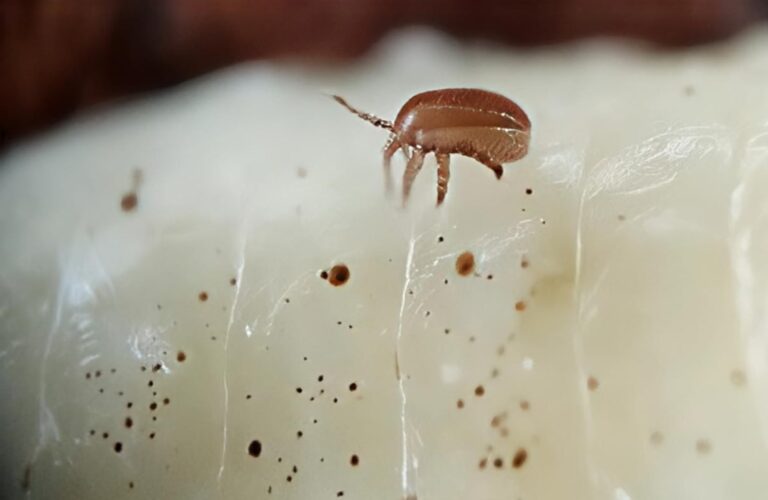
Across all the colonies we inspected, we found only a single Tropilaelaps mite. After the infestation levels we had observed in September, this was genuinely encouraging. All colonies had survived winter, brood patterns looked good, and overall colony condition appeared strong.
However, I remain cautious.
One of the major unanswered questions is not whether Tropilaelaps can be temporarily suppressed, but how quickly infestation levels rebuild once colonies enter full spring and summer brood production again. This is especially important because the convent apiary remains relatively isolated and closed. Natalie and Daniella do not move colonies, do not collect swarms, and do not purchase replacement bees. Yet despite these precautions, Tropilaelaps still reached the apiary, most likely through drifting drones or bees coming into contact with foragers from surrounding colonies.
Even more concerning is the possibility of reinfestation through robbing behaviour. Last autumn, two colonies within the apiary developed very high infestation levels after the rest of the colonies had apparently responded well to treatment. Our best explanation is that these colonies robbed nearby collapsing colonies and inadvertently brought Tropilaelaps back with them. This may ultimately become one of the biggest challenges of long-term management. Even if a beekeeper successfully suppresses infestation levels within their own apiary, neighbouring collapsing colonies may continually reintroduce mites into the surrounding area.
The Cargo Ship Incident
At the same time as the Georgian work was progressing, another event was causing significant concern internationally.
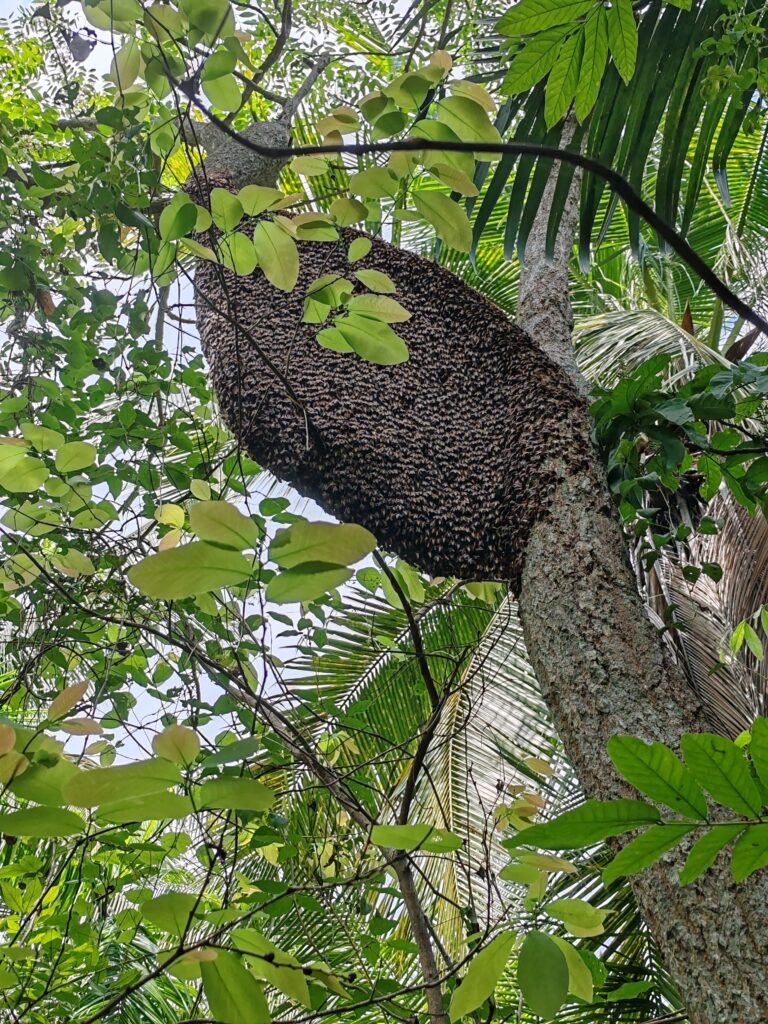
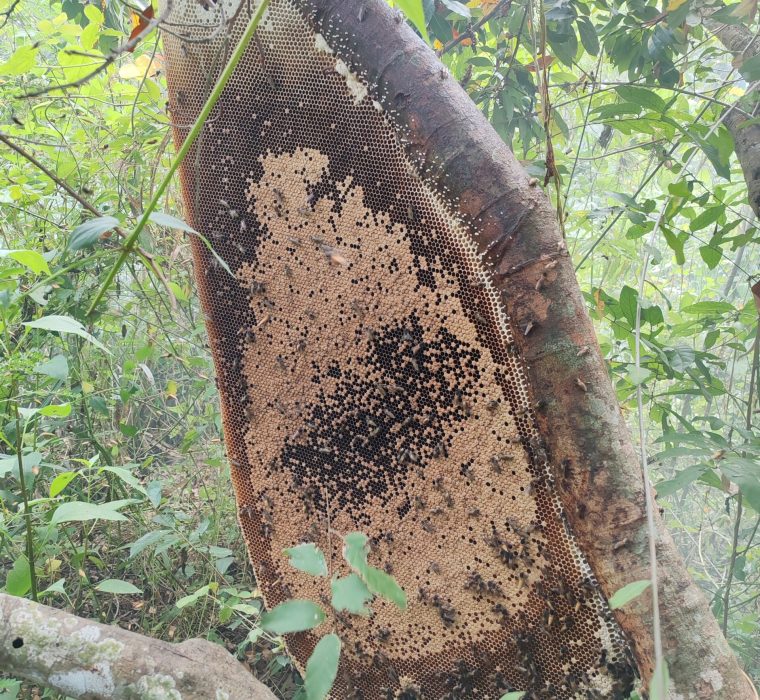
In 2025, a swarm of Apis dorsata – the giant Asian honey bee – was intercepted aboard a cargo vessel travelling from India to the United States. The swarm was later found to be carrying Tropilaelaps mercedesae.
The scientific paper describing this incident was published only recently, although rumours about the event had already circulated widely through the beekeeping community. When the interception was first casually mentioned during a beekeepers club meeting in the United States, it generated immediate alarm because very little official information had yet been released.
At the time, several of us working on Tropilaelaps discussed the incident extensively because it appeared difficult to reconcile with what was generally believed about Tropilaelaps survival biology with what was anecdotally being circulated. When the swarm was intercepted, no brood or comb was present. Traditional understanding suggests that Tropilaelaps requires brood to survive and reproduce, and many earlier assumptions about biosecurity were built around this idea. For years, this was one of the reasons swarms, package bees, and queen imports were often considered relatively low-risk pathways for Tropilaelaps transmission.
The cargo vessel incident challenges that assumption.
The published analysis suggested the bees may have been associated with the vessel for somewhere between 29 and 99 days. Even the shortest estimate greatly exceeds the survival times previously expected for Tropilaelaps in broodless conditions and that finding has major implications.
It suggests either that Tropilaelaps survival biology is far more flexible than previously understood, or that there are survival mechanisms occurring aboard adult bees that we do not yet fully understand.
Rethinking Transmission
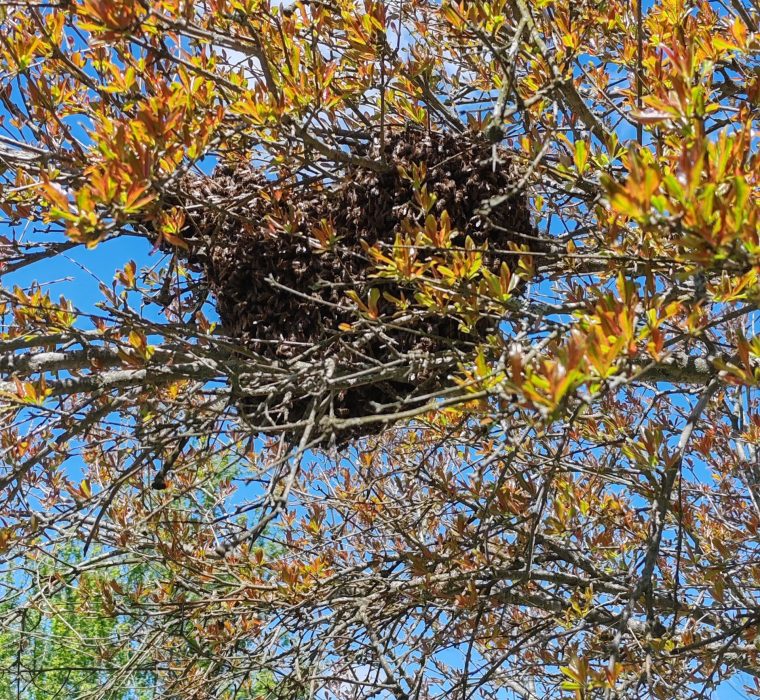
Over the last several years, both field observations and experimental work have increasingly pointed towards the same conclusion: Tropilaelaps may survive and spread under a much wider range of conditions than previously assumed. One of the most important pieces of work we carried out in Georgia investigated transmission through swarming. Traditionally, swarms were not considered especially important for Tropilaelaps spread because a swarming colony is without brood for many days.
However, in our study we found that Tropilaelaps could successfully survive and reproduce following natural swarming events. In naturally occurring swarms, the mites were transmitted into the new colony and subsequently reproduced successfully once brood production resumed. Interestingly, artificially created swarms did not show the same results, suggesting that conditions associated with natural swarming may somehow improve survival. Exactly why this occurs is still unclear. Nevertheless, the study demonstrated that swarms cannot simply be dismissed as a negligible transmission route.
Alongside this, our laboratory work examining survival on live and dead adult bees and brood has also produced concerning findings.
We observed Tropilaelaps surviving for longer periods than previously reported:
- on live adult bees,
- on dead adult bees,
- and on dead brood,
Individually, none of these observations completely explains the extraordinary survival times implied by the cargo ship incident. However, collectively they point towards a consistent pattern: Tropilaelaps appears significantly more resilient outside brood than the scientific literature has traditionally suggested. I sometimes joke during presentations that the mites clearly have not been reading the scientific literature, but there is a serious point behind the humour. Increasingly, real-world observations are forcing us to reconsider assumptions that have shaped Tropilaelaps risk assessment for years.
Implications for Global Beekeeping
All of this matters because transmission risk underpins biosecurity policy.
If Tropilaelaps can survive broodless periods for longer than expected, then pathways previously considered relatively safe may require much greater scrutiny.
That includes:
- package bees,
- queen imports,
- swarms,
- shipping vessels,
- and potentially even contaminated beekeeping equipment associated with dead brood or adult bees.
The Georgian outbreak has also demonstrated how rapidly Tropilaelaps can spread once established within migratory beekeeping systems. Within roughly two years, infestations had spread across much of the country. Taken together, the lessons emerging from Georgia and Southeast Asia increasingly suggest that Tropilaelaps is not simply “another Varroa.” Its biology, transmission pathways, and epidemiology may differ in ways we still do not fully understand.
At the same time, the convent apiary also offers a small degree of optimism. Despite the severe infestations observed last autumn, intensive management appears – at least temporarily – to have brought infestation levels down to extremely low levels. Whether that success can be sustained through the 2026 season remains uncertain, but the results so far are encouraging.
For now, many of the most important questions remain unanswered.
- How long can Tropilaelaps truly survive without brood?
- How important are swarms and drifting bees in transmission?
- Can brood interruption strategies provide sustainable control?
- And perhaps most importantly: what will long-term management realistically look like for beekeepers if Tropilaelaps becomes globally established?
Hopefully, by the time I return to Georgia in June, we may have at least a few more answers.