Another topic that generated equally thought-provoking discussion was miticide resistance in Varroa populations. This conversation (specifically in relation to amitraz) has been evolving rapidly as new research continues to improve our understanding of how resistance develops, how beekeepers can slow its development, how widespread and extensive it is, and how the different methods used to measure resistance should be interpreted.
Notably, we touched on the results of genetic mutation (i.e. genetic variants) testing from some of the beekeepers in the room in relation to their hive treatment histories, how field resistance tests work, and the growing number of genetic variations associated with resistance in Varroa that have been identified around the world (e.g. Spain, France, Korea, Turkey, and the U.S./Canada).
One important point emerged repeatedly: detecting resistance-associated genetic variants does not necessarily mean that an amitraz product such as Apivar will immediately and entirely fail (at least to the naked eye) at the apiary level in the field. For example, one study found that a mite population with a high frequency of genetic variants associated with resistance still experienced 35% mite mortality following treatment, compared to nearly 90% mortality in a susceptible population1. This level of control can create a temporary appearance of “efficacy.” Indeed, broad miticide failures have certainly been documented, and many North American beekeepers have reported declining efficacy of amitraz. However, the relationship between resistance-associated genetic variants in Varroa and the field performance of a given product is complex, with treatment outcomes influenced by factors such as the frequency of resistant mites within a population, the specific resistance mechanisms present, how the product is used, and more. To complicate matters further, a study published in 2024 from France found that even when the 260 mutation was common in local mite populations, amitraz remained effective.
That said, a high frequency of resistance-associated mutations in a mite population is an important warning sign and should prompt careful monitoring of treatment efficacy and resistance trends.

Multiple Mechanisms of Resistance Are Possible
While alterations to the mite’s octopamine receptor – the primary target of amitraz – is one well-established mechanism of resistance, it is far from the only one. Other possible mechanisms of resistance to treatments may include enhanced metabolic detoxification, reduced pesticide uptake caused by changes to the cuticle2, or even behavioural adaptations that reduce exposure3. Possibilities of overlapping mechanisms may help explain why genetic testing, caged-bee bioassays (tests), and whole-apiary treatment performance do not always tell exactly the same story. Rather than contradicting one another, each provides a different window into the larger picture of resistance.
For beekeepers this is frustrating. Our input costs are high, our treatments windows are short, and we want to have confidence that our actions are effective. The best thing we can do along the way is keep rotating active ingredients throughout the year and monitoring to ensure our treatments worked.
Ongoing research led by Dr. Patricia Wolf-Veiga at the National Bee Diagnostic Centre aims to identify the extent and distribution of miticide resistance in Canada, including better understanding how these different measurements relate to one another and ultimately improve how miticide resistance is monitored, interpreted, and managed in Canada. You can send in your mites for testing this year!
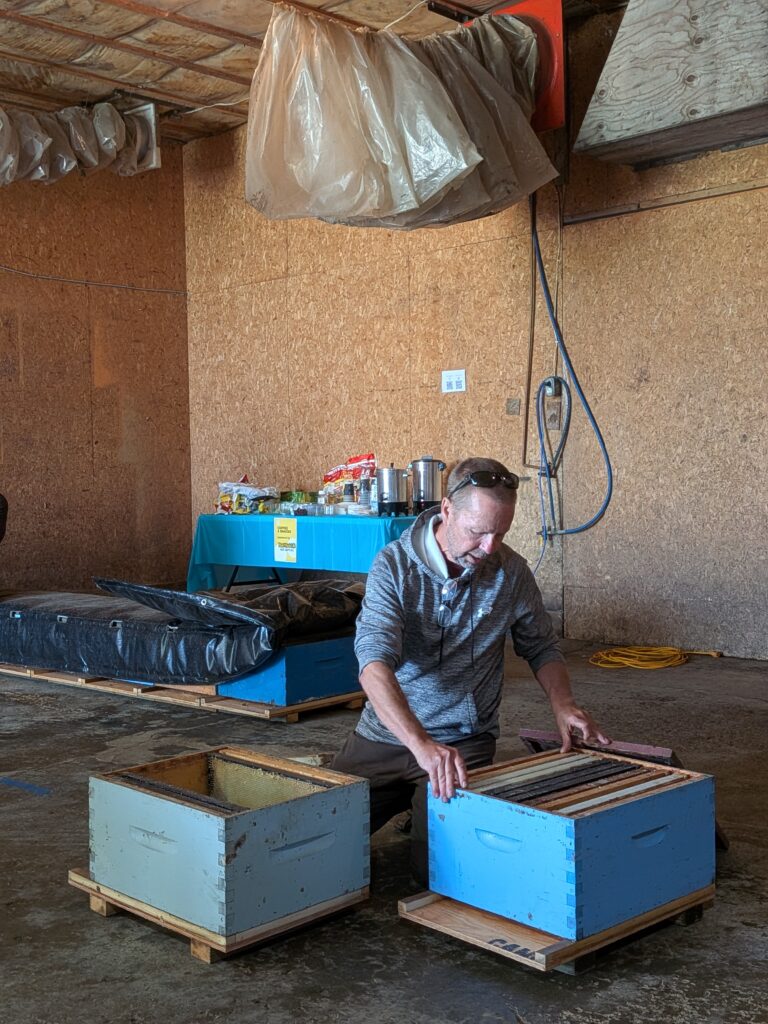
Building on the resistance discussion, Lucas Gordon of Dancing Bee Manitoba demonstrated the “Pettis test kit” used to evaluate miticide susceptibility in Varroa populations. Derek and Matthew continued the conversation by speaking to the strengths and limitations of cage-based resistance tests that have been used in Manitoba over the past several years to monitor resistance and understand provincial trends.
Before lunch, Ella Boyda, a summer student with the University of Manitoba Honey Bee Lab working under the supervision of Dr. Nuria Morfin, provided an update on the lab’s current research. She highlighted several ongoing projects, including efforts to develop a vaccine against deformed wing virus (DWV).
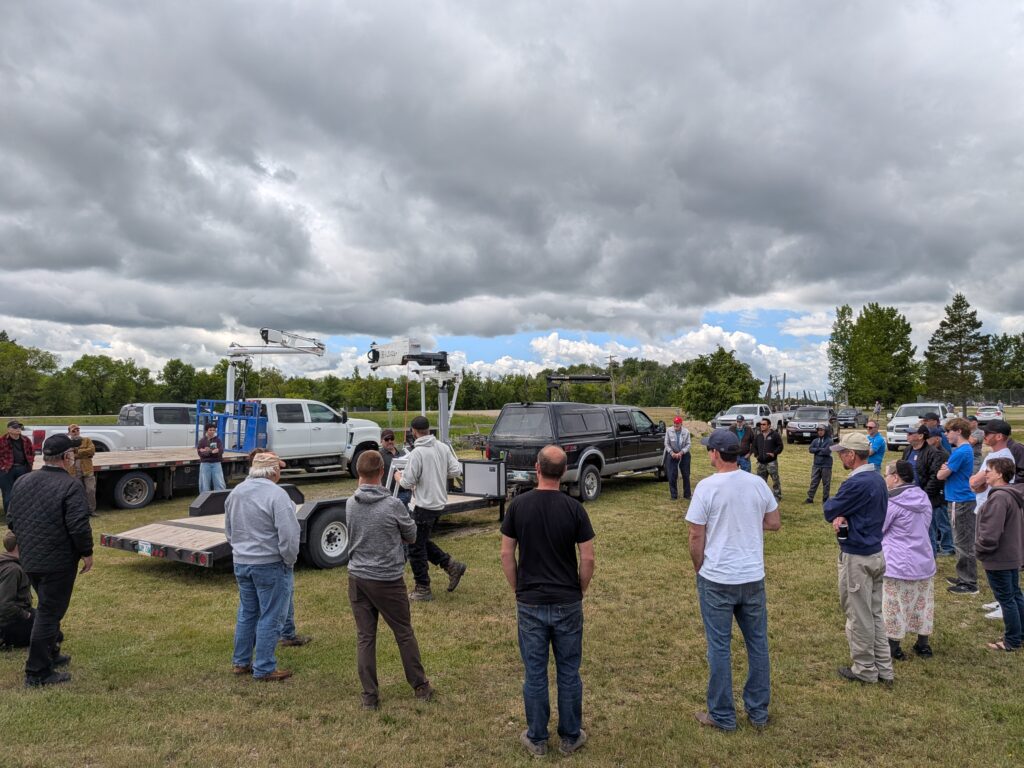
Following a lunch generously sponsored by Dancing Bee Manitoba, attention shifted outdoors for a series of hiveloader demonstrations.
Chris Bartel with EZ Loader, Sheldon Reimer of Heritage Steelworks, and Jeff Hildebrand of Cancade each demonstrated their equipment, giving attendees the opportunity to compare designs, ask questions, and watch the loaders in action.
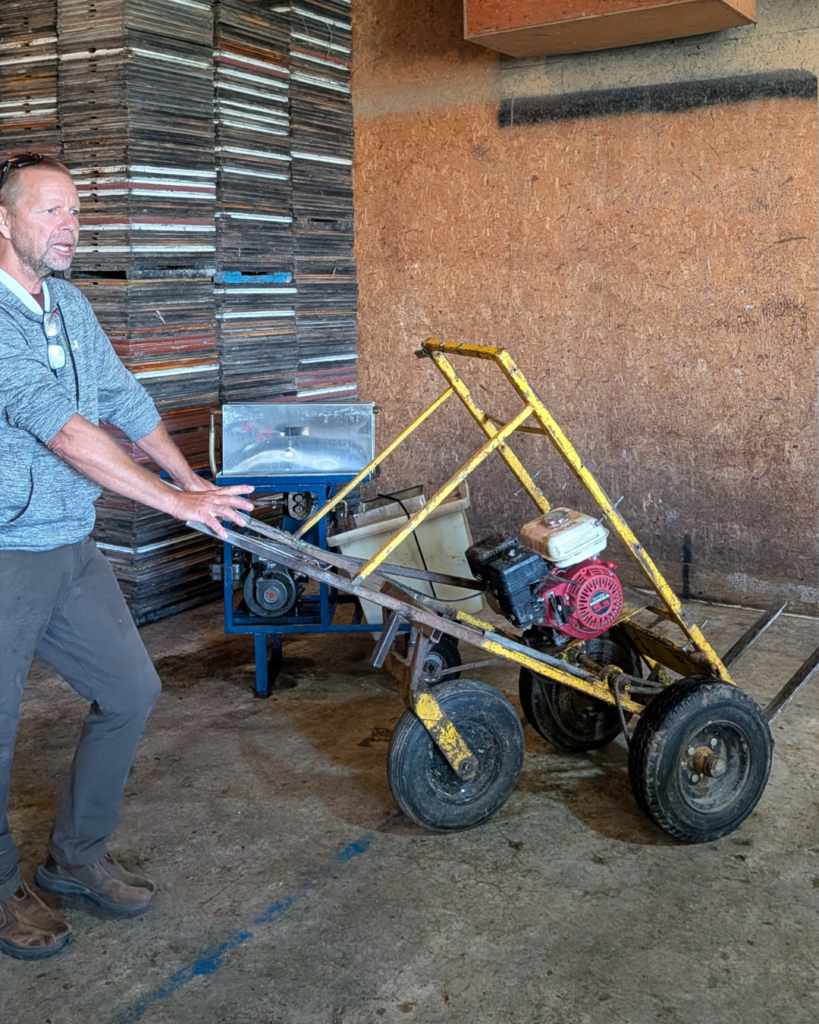
The afternoon concluded with a focus on Rocklake Apiaries, where Tom Lockhart shared several of the practices that have shaped his operation. He walked us through how they make replacement splits and showed off his very own “hiveloader”: a motorized hand cart. This simple cart has quietly served as one of the operation’s workhorses for decades (around 50 years), carrying countless stacks of honey (millions of pounds!) and shifting hives onto trucks and trailers in all seasons.
Tom also shared his approach to outdoor wintering colonies using 10-pack wraps arranged in rows, while discussing the strengths and challenges of both indoor and outdoor wintering. Although he winters some colonies indoors because suitable outdoor sites are limited, Tom believes outdoor wintering in single brood chambers generally produces better results. Based on years of observation, Tom told us that his outdoor wintered colonies tend to consume less winter feed, emerging heavier in spring, exhibit fewer signs of stress, and often build up more quickly than comparable colonies wintered indoors. His experience challenges a few common assumptions about indoor wintering and sparked discussion about how local climate, equipment, and wintering sites influence overwintering outcomes.
Throughout the day, attendees had high chances of taking home door prizes thanks to the generous support of Dancing Bee Manitoba, Apis Tactical, Lewis and Sons, Tri-Bee Woodenware, and Nazariy Dyakiv.
A sincere thank you goes to Tom, his family, and the entire Rocklake Apiaries crew for generously opening their doors and putting so much work into hosting the day. Big thanks to all those who came out for a fun day.
We hope you can make it to the 2027 Field Day!
References:
1,2) Identification and functional characterization of CYP3002B2, a cytochrome P450 associated with amitraz and flumethrin resistance in the major bee parasite Varroa destructor. Mavridis et al. 2025. DOI: 10.1016/j.pestbp.2025.106364. The researchers found that resistant mites have two lines of defense. First, they appear to have a more protective outer shell that may reduce how much pesticide gets inside. Second, they produce an enzyme that acts like a detoxification system, breaking down both amitraz and flumethrin before the chemicals can kill the mite. This means the same resistance mechanism may reduce the effectiveness of more than one type of miticide.
3) “Another Type of Varroa Treatment Resistance”. Max Watkins. American Bee Journal, Vol 166, No 7. July 2026.