Manitoba Beekeepers Association

Honey Bee Swarm Relocation

Please note that neither the Manitoba Beekeepers' Association (MBA) nor the Knowledge & Research Transfer Program (KRTP) provide swarm removal or relocation services.

While honey bees are important pollinators, they are not endangered and generally do not need to be rescued.

Below you'll find information to help identify the insect and determine the next steps.

Identification

Identifying the insect is the first step. Wasps and bumble bees are often mistaken for honey bees, so be sure to identify what you've found before contacting anyone. See the identification guide below for help identifying a few common insects and honey bee lookalikes.

Need a Honey Bee Swarm Removed?

Honey bee swarms are generally docile because they are focused on finding a new home, but they should not be unnecessarily disturbed or made to feel threatened. Swarm relocation should be carried out by someone who is confident and experienced in handling honey bees.

If you find a honey bee swarm on your property and wish to have it relocated, first confirm the species, then proceed to contact a local beekeeper or, if you are in the Winnipeg region, the RRAA Swarm Patrol .

You may also seek assistance through the Beekeeping in Manitoba Facebook group.

Swarm removal is commonly offered as a fee-for-service rather than as a volunteer service. Capturing and relocating swarms often requires considerable time, travel, and specialized equipment. If your swarm is removed by a volunteer, please consider reimbursing them for their time and travel expenses.

Information to Include

When contacting a swarm catcher, please include:

  • Photos of the bees
  • Town or community
  • Swarm location details (tree, fence, shrub, structure, building, height off the ground, etc.)
  • Your name
  • Phone number
  • Email address
Please note:If bees are entering and leaving a wall, chimney, tree cavity, or other enclosed structure, they have likely established a colony rather than forming a temporary swarm. Established colonies may require extensive removal efforts and may not be suitable for relocation.

Honey Bee Identification Guide
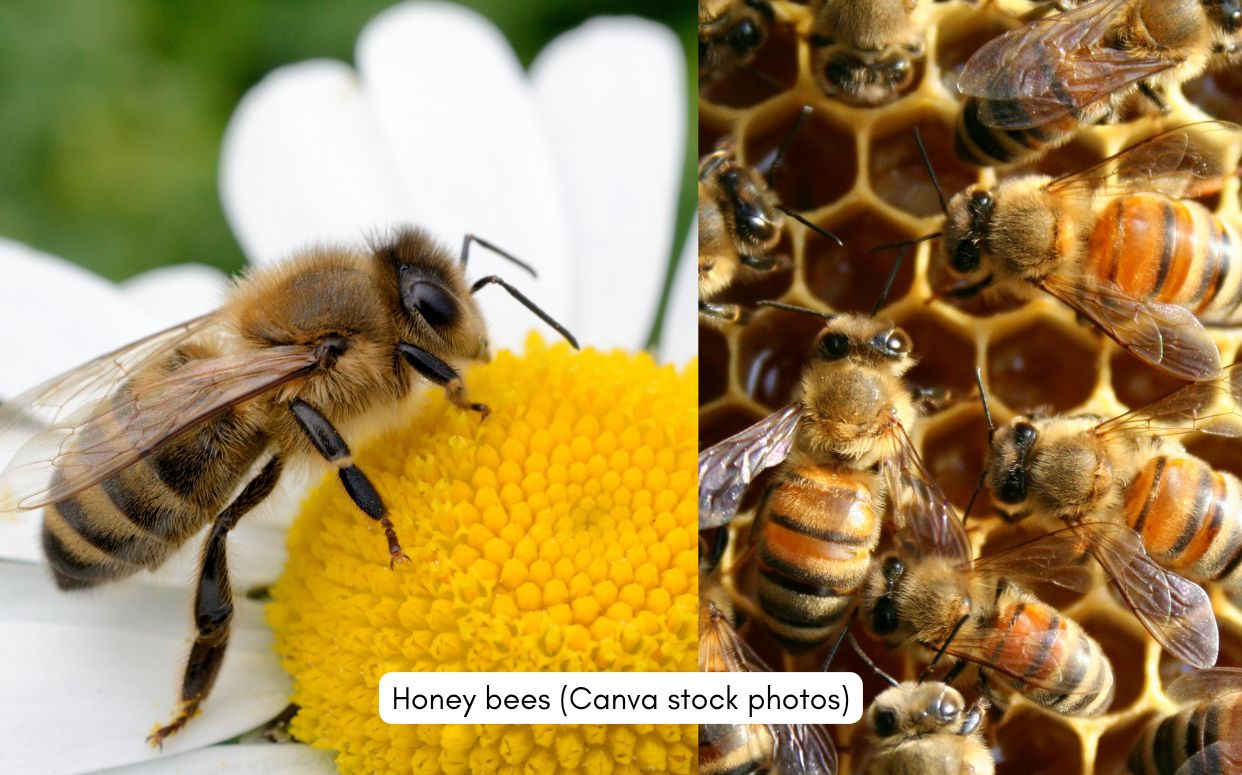
Honey Bee

Honey Bee

Managed by beekeepers

  • Slightly fuzzy
  • Golden-brown with black bands
  • Slender, elongated body
  • Build wax comb inside cavities such as hives, trees, or walls

A honey bee swarm is a large cluster of bees – often about the size of a soccer ball – temporarily clustered on a tree branch, fence post, shrub, or other object while scout bees search for a new home.
Not Honey Bees

Not Honey Bees

Not managed by beekeepers

Although the following insects are not managed by beekeepers, some local beekeepers may occasionally offer removal or relocation services.

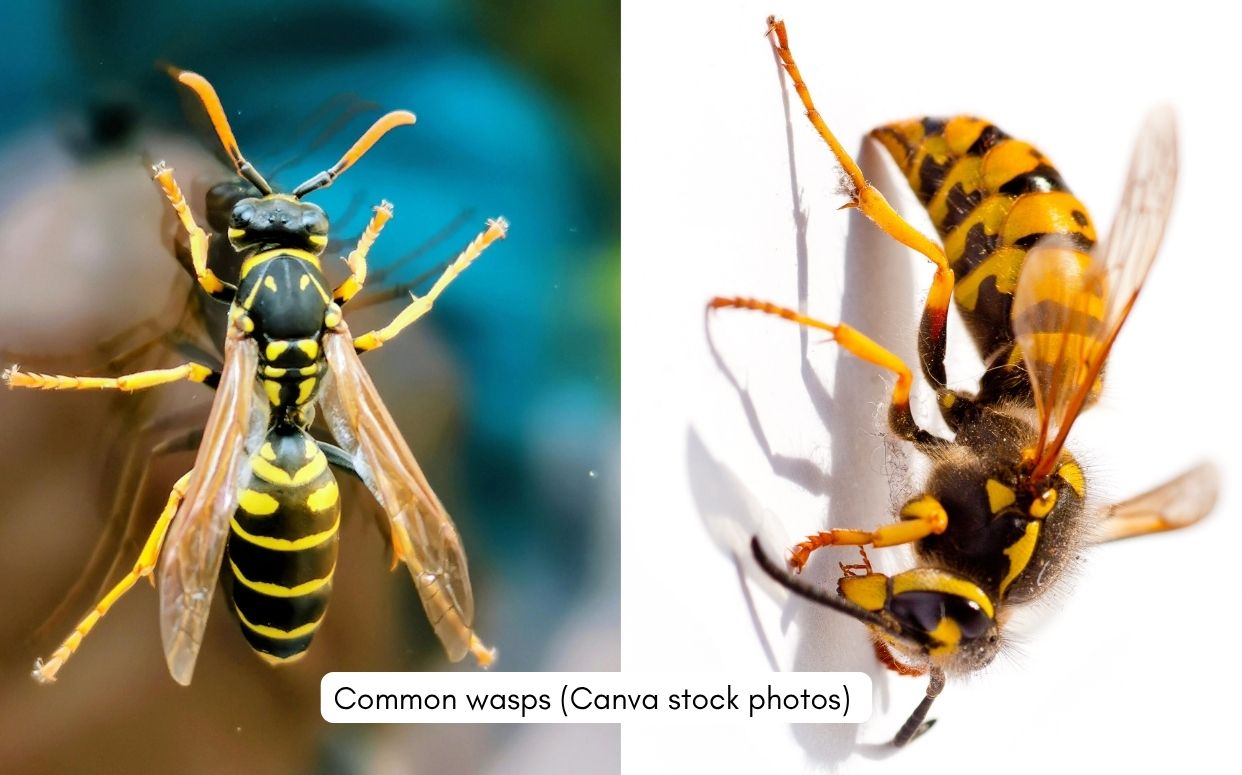
Wasps

  • Hairless
  • Black and yellow or black and white
  • Build grey paper nests

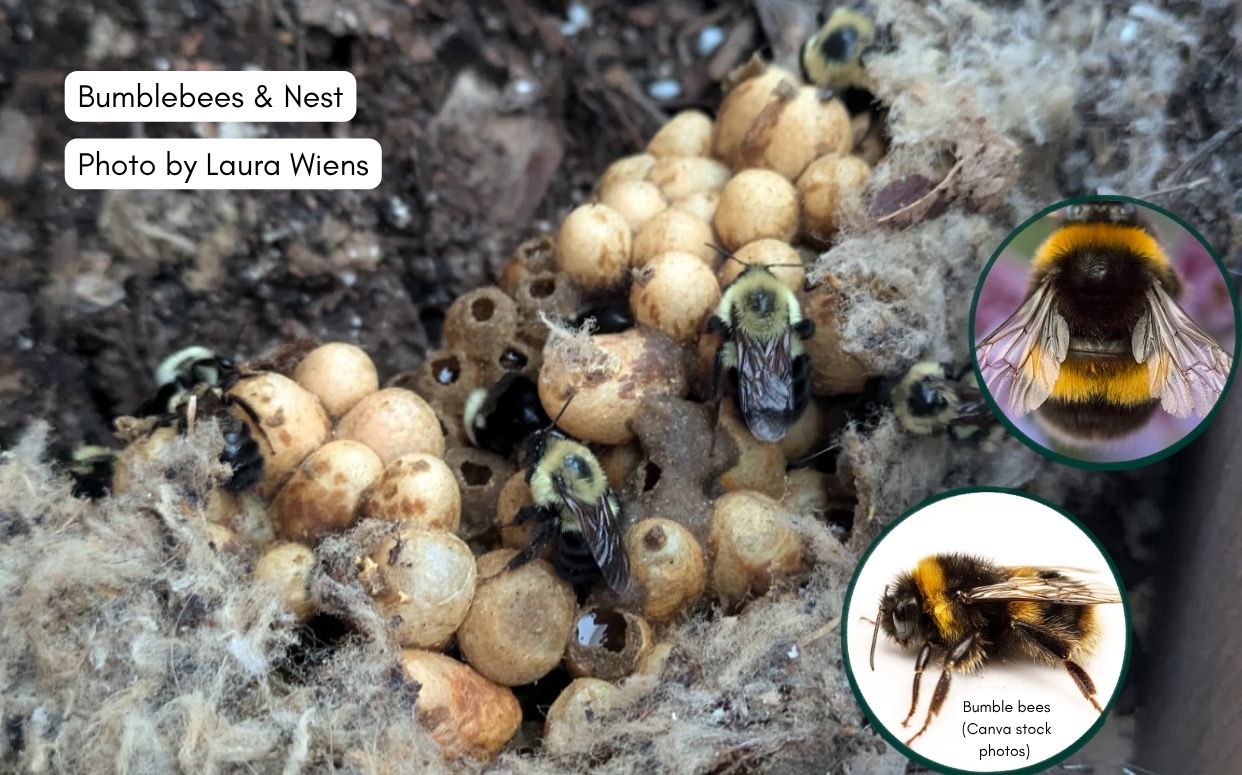
Bumble Bees

  • Very fuzzy
  • Black and amber in colour
  • Rounder body shape
  • Usually nest in the ground
Bumble Bee Nest

Bumble bee colonies occupy a single nest for one season and naturally die out in the fall, with only new queens surviving the winter.

Preferred option: Leave them undisturbed. Bumble bees will not return to the same nest site the following year.

Alternative options:

  • Relocation
  • Destruction
Learn more about bumble bee relocation!

What is a Honey Bee Swarm?

Swarming is a natural honey bee behaviour and is the way colonies reproduce by splitting. In Manitoba, swarming most commonly occurs during late spring and early summer. When a colony swarms, the queen and approximately half of the worker bees leave their hive to establish a new colony, while the remaining workers stay behind to raise a new queen. During this process, the bees usually remain in a temporary cluster for several hours to a couple of days while scout bees search for a permanent nesting site. Once a suitable location is found, the swarm moves on. Swarms can also be collected by beekeepers and used to establish a new hive.
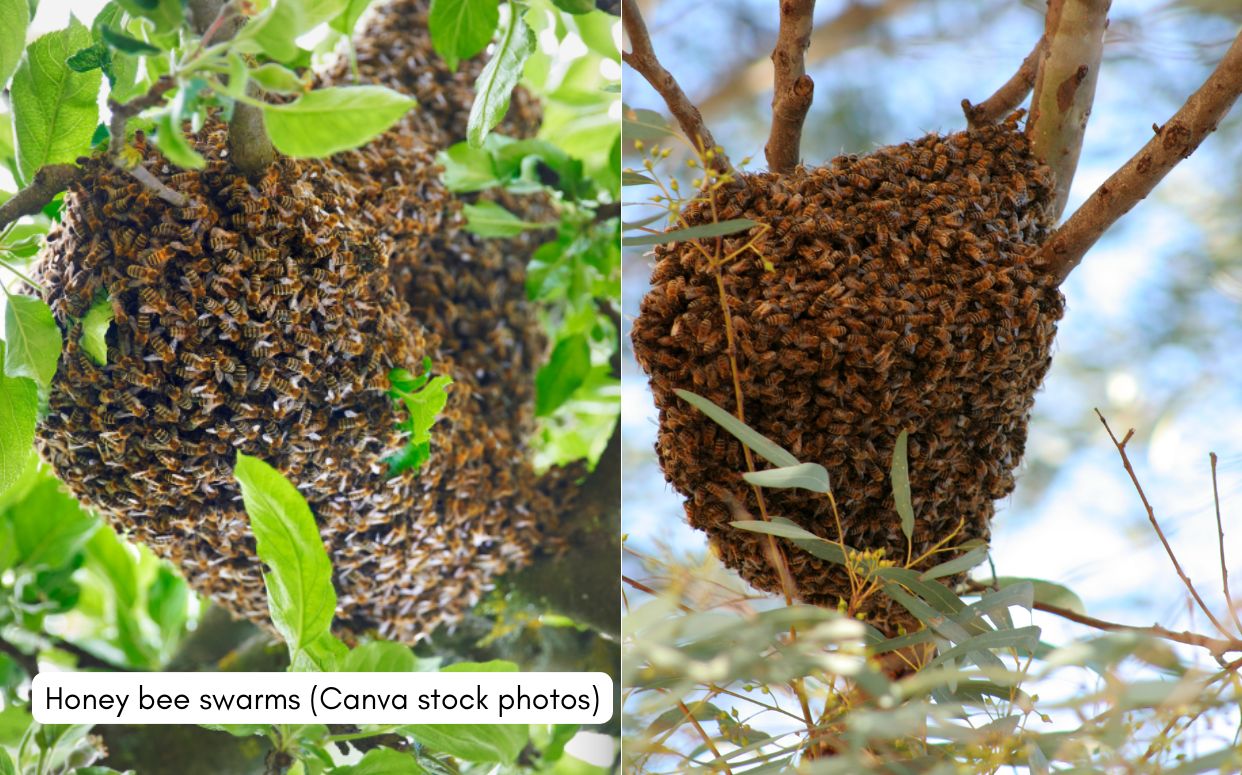
Honey Bee Swarm

What is a Temporary Swarm?

A temporary honey bee swarm is a cluster of bees that has recently left its original hive and is resting while scout bees search for a new nesting site. These swarms usually remain in one location for a few hours to a couple of days before moving on. Because they have not yet built a nest, they can often be safely relocated by an experienced beekeeper.

Scroll to Top